


LED Toothbrush Timer (120368)
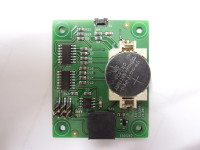
The timer presented here is designed to look like and mimic a classic sandglass and should need zero explaining to your kids, the operation being intuitive. If they can switch on the TV and the WiFi router, surely they can operate this timer too. Press the button to start the timer.
The timer presented here is designed to look like and mimic a classic sandglass and should need zero explaining to your kids, the operation being intuitive. If they can switch on the TV and the WiFi router, surely they can operate this timer too. Press the button to start the timer. LEDs light in sequence to imitate sand grains trickling down, and (yes) a modest beep sounds every 30 seconds, as well as when “time’s up”. One LED equals 10 seconds.
Status
Design and components were slightly altered due to distributor availibility.
PCB design in progress.
Update
PCB ordered. Components are delivered.
Update 22-Nov-2012:
Prototype built and tested.
It works but there were just two issues.
Glue the battery holder to the PCB! You might tear off the pads if that is the only connection to the PCB.
Also program the microcontroller before you solder it on the PCB, or use an external 3V supply to program the microcontroller. This is because of the current draw from the battery, due to that the voltage drops to about 2.2V. ISP programmers seem to refuse programming a microcontroller at that low a voltage.
Want to build a project?
Bring your design to life with the Elektor PCB Service, powered by Eurocircuits. Upload the project files and order professionally manufactured PCBs or assembled boards through a proven European production platform.
Supporting KiCad, Eagle, Gerber, and ODB++ formats, the service is suitable for everything from prototypes and validation builds to series production and volume manufacturing.
Made in Europe. Fast. Reliable. Professional.
Discussion (0 comments)