| The PR4403 is an enhanced cousin of the PR4402 40 mA LED driver. It has an extra input called LS which can be taken low to turn the LED on....



Burkhard Kainka (227)
€5 (FREE for Members)
€5 (FREE for Members)
| The well-known PR4401 and PR4402 LED drivers from PREMA have enjoyed great popularity as a result of their low cost, tiny physical size, and...
€5 (FREE for Members)
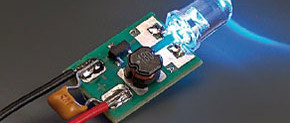
| Elektor September 2007 comes with a board containing an LED booster circuit which you can try out for yourself. Although tiny, the board con...
€5 (FREE for Members)
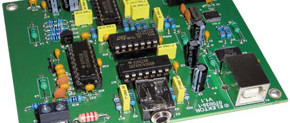
| Although bats are common animals, it is rare to actually catch a glimpse of one. In the dark they are practically invisible, and their ultra...
€5 (FREE for Members)
| Almost as soon as the Software Defined Radio article was published in the May 2007 issue of Elektor Electronics, we started receiving reques...
€5 (FREE for Members)
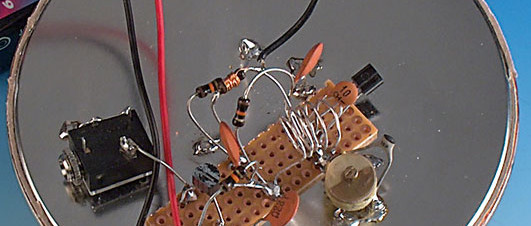
| Building an AM receiver is a simple project for a beginner, but building an FM receiver is rather trickier. However, with a little ingenuity...
€5 (FREE for Members)
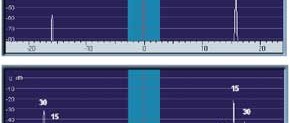
| The key to using a soundcard successfully in digital signal processing or digital radio applications lies principally in the characteristics...
€5 (FREE for Members)
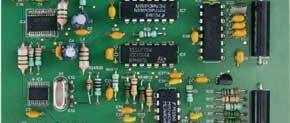
| SD (software-defined) radio receivers use a bare minimum of hardware, relying instead on their software capabilities. This SDR project demon...
| Until now panoramic display and selectable bandwidth were features found only on top range (and fearfully expensive!) shortwave receivers. R...
€5 (FREE for Members)
| The CDCE706 and CDCE906 from Texas Instruments are interesting new clock generators which include three independent PLL modules. They also f...