


Engineering in August: 8-Bit Arduino Sounds, a Simple Hybrid Amp, and More
August 23, 2022
on
on
With the end of the summer right around the corner, now is a good time to look back at some of the most notable engineering articles and projects from previous August editions of Elektor. Check out the following summaries and let us know what you think.
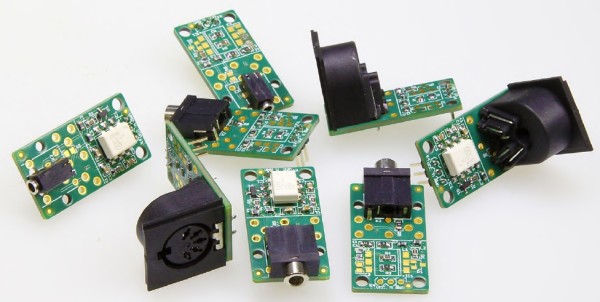
“The new MIDI breakout board (BoB) we present here can be equipped with either one of the three connector types: DIN, TRS-3.5 or TRS-2.5,” he wrote. “Furthermore, the BoB supports RF grounding and 3.3-volt signaling, and the same PCB can be configured as either a MIDI In or MIDI Out (or MIDI Thru, which is the same thing as Out).”
-
He then goes on to cover ground loops vs EMC, MIDI in calls for an optocoupler, calculations for low-voltage signaling, and more. Check out the article and dive into the engineering.
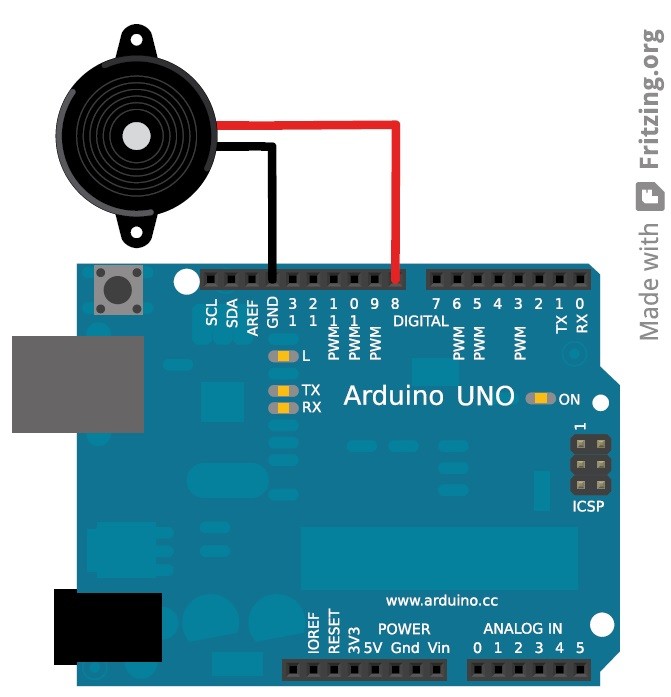 "We will start by looking at the easiest way to create sound by means of a simple piezo buzzer or a speaker," he explained. "I will then introduce the Arduino Tone Library, as a simplified way to achieve the same functionality. And I will close by introducing an advanced technique that allows playing short sounds stored in the form of .wav files. When it comes to the theory, you will be introduced to a technique known as 1-bit Delta Sigma Digital to Analog conversion, but don’t be scared by the name, the methods and technologies are presented along with examples you can easily reproduce with a minimal set of parts."
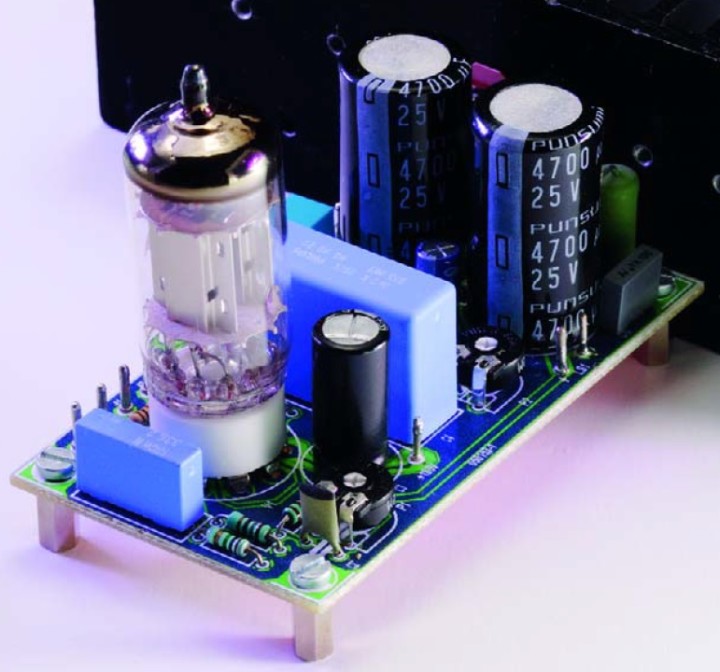
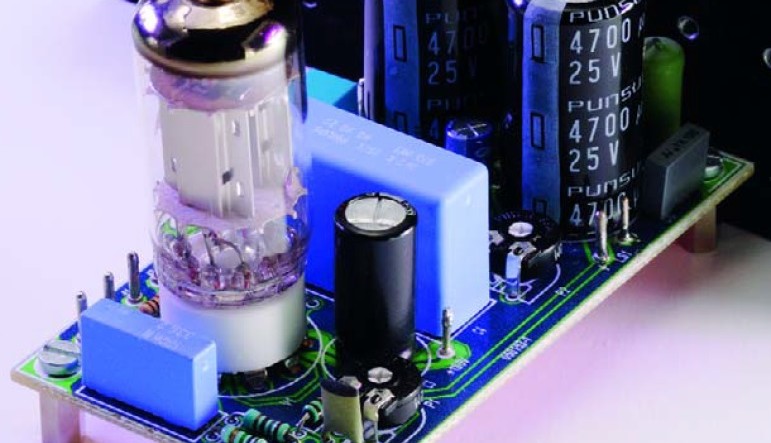
The design’s features and specs include: min gain = 12.3×, max gain = 31.6 ×, input sensitivity = 0.64 V at min gain, bandwidth = greater than 200 kHz, and LF roll-off = 11 Hz.
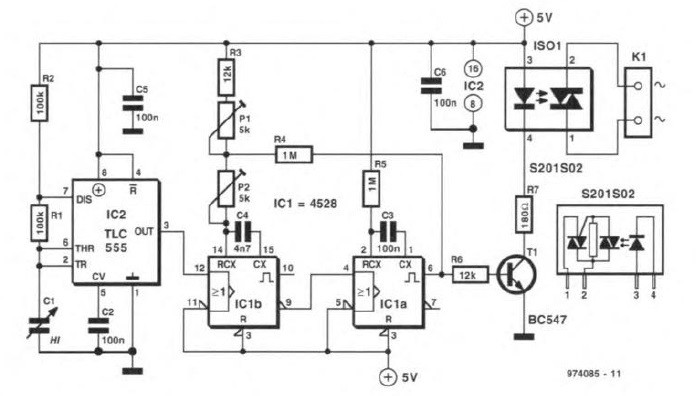 “Normally, hygrometers use a hygristor as sensor; but the present circuit uses a capacitor whose capacitance is dependent on the degree of humidity.”
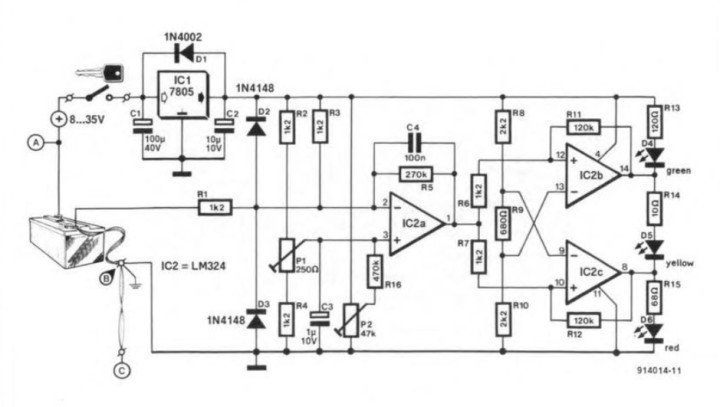 “Two LEDs fitted in the car interior indicate whether the battery is charged or discharged with a significant current, providing a reassuring check on the generator function. A third LED is provided to indicate a kind neutral area in which the battery is only lightly charged or discharged."
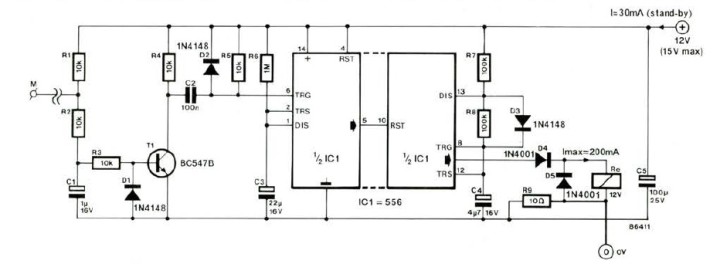 If it is someone attempts to steal the car radio, the system sounds the horn for 30 seconds, which should be enough time to scare away the thief.
MIDI I/O Breakout Board (August 2019)
In the summer of 2019, more than 35 years after MIDI was standardized, Clemens Valens introduced our readers to MIDI 2.0 and its new features, including two new connectors.“The new MIDI breakout board (BoB) we present here can be equipped with either one of the three connector types: DIN, TRS-3.5 or TRS-2.5,” he wrote. “Furthermore, the BoB supports RF grounding and 3.3-volt signaling, and the same PCB can be configured as either a MIDI In or MIDI Out (or MIDI Thru, which is the same thing as Out).”
-
He then goes on to cover ground loops vs EMC, MIDI in calls for an optocoupler, calculations for low-voltage signaling, and more. Check out the article and dive into the engineering.
Arduino on Course: Welcome & Arduino 8-bit Sound Generation (August 2012)
Elektor readers and engineers have been Arduino fans from the start. In the summer of 2012, kicked off a popular series "Arduino on Course" with Arduino's co-founder David Cuartielles. The first article in the series he presents everything you need to understand in order to play 1-bit sound from a digital pin on an Arduino board.Simple Hybrid Amp (August 2006)
Which are better — valves or transistors? Elektor author Frans Janssens asked this question back in 2006. He didn’t answer the question (he left that up to you), but he did go on to offer an interesting design. His simple hybrid amp “uses a valve as a pre-amplifier and a MOSFET in the output stage. The strong negative feedback makes the frequency response as flat as a pancake.”The design’s features and specs include: min gain = 12.3×, max gain = 31.6 ×, input sensitivity = 0.64 V at min gain, bandwidth = greater than 200 kHz, and LF roll-off = 11 Hz.
Hygrometer (August 1997)
Need a hygrometer? If so, why buy when you can build? Back in 1997 we presented a simple design of a device for measuring — or generating an output signal proportional to — ambient humidity. The design was suitable for switching on a ventilator or dehumidifier in spaces such as a bathroom or kitchen where the humidity at certain times can reach uncomfortable or unacceptable levels.Car Battery Monitor (August 1991)
Before cars had hundreds of MCUs and sensors monitoring everything from temperature to tire pressure, engineers had to create their own DIY solutions. In 1991 Elektor featured car battery monitor design that enabled drivers to monitor battery status with a few LEDs.Car Radio Alarm (August 1986)
In the summer of 1986, car radio theft was apparently rampant enough for an Elektor community member to design an alarm for his vehicle. “The purpose of this one-chip circuit is to give an audible alarm in case a thief attempts to steal the car radio, which is generally considered an item of prime importance to the motorist's well-being during any trip with his vehicle.”The Engineering Continues
In September, we will highlight more classic Elektor articles, projects, and tutorials. If you have any ideas, questions, or feedback, please share your thoughts in the comments section below. The engineering never stops!Read full article
Hide full article
Discussion (0 comments)