


Oscilloscopes: Understanding and Using Them Effectively by Rémy Mallard
September 3, 2025
on
on
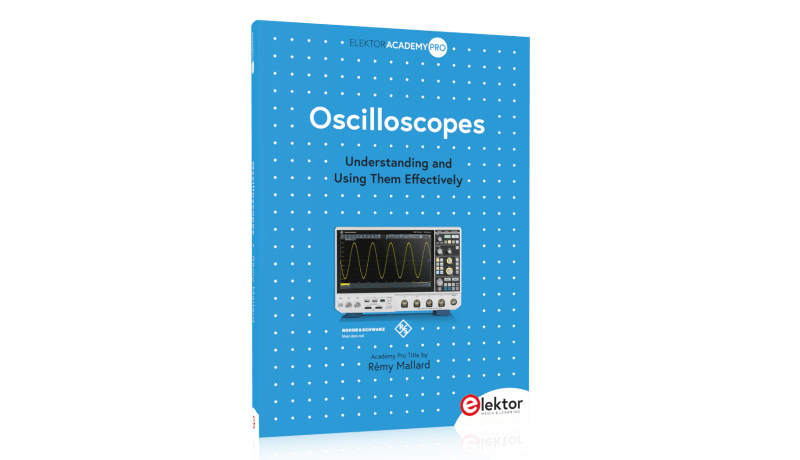
In electronics, few instruments are as indispensable as the oscilloscope. Rémy Mallard’s Book “Oscilloscopes: Understanding and Using Them Effectively” sets out to demystify this essential tool, offering readers not just an instruction manual, but a true learning companion. Rémy Mallard succeeds in presenting a thorough, structured, and engaging introduction that appeals equally to beginners, autodidacts, and professionals seeking a reliable reference.
Chapter 3 is particularly valuable for readers navigating the often bewildering task of choosing an oscilloscope. Mallard compares laboratory and portable models, PC-based instruments, kits, and even tablet or pen oscilloscopes, weighing their advantages and trade-offs. Chapter 4 then addresses configuration: from probe calibration and coupling modes to triggering techniques and essential settings.

The book’s heart lies in Chapters 5 and 6, where Mallard explores both basic and advanced measurements. Voltage, time, frequency, duty cycle, and phase are treated in a methodical manner, followed by more advanced topics such as:
Modern features of digital oscilloscopes, such as integrated function generators, eye diagrams, and jitter measurements, are also explained. Chapter 7 reinforces these lessons with exercises and worked solutions—an invaluable feature for students and self-learners.
Later chapters and appendices broaden the scope to signal generators, electrical safety, digitization fundamentals, creative repurposing of oscilloscopes, and even building one’s own probes.
Importantly, the author also emphasizes safety, reminding readers of the risks of DIY measurement and offering practical advice to avoid electrocution—something many technical books neglect.
Verdict: Highly recommended for students, hobbyists, and practicing engineers alike—an indispensable addition to the electronics bookshelf.
Overview
- Author: Rémy Mallard
- Full Title: Oscilloscopes: Understanding and Using Them Effectively
- Publisher: Elektor, paperback (2025)
- Pages: 326 in full Color
- Format: 17 × 24 cm
- ISBN: 978-3-89576-677-0
Content and Structure
The book opens with a compelling reflection: electronics remains invisible to the naked eye until revealed by the oscilloscope. From this premise, Mallard guides the reader systematically. Chapter 1 introduces the oscilloscope, contrasting analog and digital models, and explaining key concepts such as bandwidth, sampling frequency, resolution, and memory depth. Subsequent chapters cover probes in detail—including passive, active, and differential types, with clear discussions of safety considerations (Chapter 2).Chapter 3 is particularly valuable for readers navigating the often bewildering task of choosing an oscilloscope. Mallard compares laboratory and portable models, PC-based instruments, kits, and even tablet or pen oscilloscopes, weighing their advantages and trade-offs. Chapter 4 then addresses configuration: from probe calibration and coupling modes to triggering techniques and essential settings.
The book’s heart lies in Chapters 5 and 6, where Mallard explores both basic and advanced measurements. Voltage, time, frequency, duty cycle, and phase are treated in a methodical manner, followed by more advanced topics such as:
- noise analysis
- XY measurement
- Lissajous figures
- protocol decoding (I²C, SPI, UART)
- spectral analysis
Modern features of digital oscilloscopes, such as integrated function generators, eye diagrams, and jitter measurements, are also explained. Chapter 7 reinforces these lessons with exercises and worked solutions—an invaluable feature for students and self-learners.
Later chapters and appendices broaden the scope to signal generators, electrical safety, digitization fundamentals, creative repurposing of oscilloscopes, and even building one’s own probes.
Style and Accessibility
What elevates Mallard’s work is not only its completeness but also its tone. He writes with clarity, enthusiasm, and humor. The use of color illustrations enhances comprehension, and the balance of theory and practice ensures the material remains accessible without sacrificing depth.Importantly, the author also emphasizes safety, reminding readers of the risks of DIY measurement and offering practical advice to avoid electrocution—something many technical books neglect.
Who This Book Is For
Whether you’re plugging in your first 1:10 passive probe or digging deep into serial bus decoding, Oscilloscopes by Rémy Mallard earns its place on your bench. It strikes the perfect balance between theory, practice, and safety. Prepare to be both entertained and empowered—this book makes the invisible visible, and once you’ve seen the first waveform, there’s no turning back. All in all the book can be recommended to:- Self-taught hobbyists
- Beginners wanting a clear, step-by-step introduction to oscilloscope basics
- Experienced engineers seeking a concise yet complete reference to both analogue and digital scopes
- Anyone aiming to move beyond theory to hands-on exercises, from probe calibration to serial-data decoding
Few Minor Drawbacks
A handful of typos and layout glitches crop up, which can momentarily confuse the inexperienced reader. Also some advanced sections assume complex electrical-engineering concepts, so true novices may need to supplement with introductory texts. Finally, some more self-guided tests and real-world troubleshooting examples could have been added.Conclusion
Oscilloscopes: Understanding and Using Them Effectively stands out as both an educational text and a reference manual. Mallard succeeds in making a potentially dry subject lively and engaging, while never losing sight of accuracy and safety. For beginners, it offers a structured, confidence-building journey; for professionals, it provides a clear and comprehensive overview of both analog and digital techniques. In short, this book fulfills its promise: it not only teaches how to use an oscilloscope effectively but also demonstrates the instrument’s role in revealing the hidden world of electronics.Verdict: Highly recommended for students, hobbyists, and practicing engineers alike—an indispensable addition to the electronics bookshelf.
Read full article
Hide full article


Discussion (0 comments)