


Optimizing Power Efficiency in Battery-Driven Edge AI Devices
on
Smarter at the Edge, but at What Power Cost?
Edge AI transforms battery-powered applications across industries. Unlike IoT devices that send data to the cloud, edge AI processes information locally, leading to faster decisions, reduced latency, and greater autonomy. However, this intelligence demands more power.
Running AI models locally increases computational load, memory access, and heat, all of which consume more power or affect the battery. Different ML models vary in efficiency, so finding the right balance is key. In some cases, local processing reduces costly transmissions; in others, it may use more energy than it saves.
The upside? Modern edge AI can optimize itself, adjusting power use through event-driven processing and more intelligent power management. As models evolve, so does their efficiency — delivering both intelligence and energy awareness at the edge.
Ensuring Longevity in Edge AI Applications
Today, one of the key characteristics of successful engineering teams in terms of longevity is their ability to continuously optimize hardware, firmware, and software to achieve the required efficiency and reliability. Integrating edge computing into the product specification introduces new parameters and dependencies that require optimization. Four habits stand out as key to achieving this.
Optimize the ML Model
Machine learning models can be tuned for lower energy consumption without significant loss of accuracy. Apply techniques such as quantization, pruning, or smaller architectures to reduce inference power [1,2]. A lighter model means faster inference and more sleep time for the MCU, both of which are essential for extending battery life. While effective, actual power savings depend on the hardware, model, and software optimizations, and they should be measured at each iteration.
Optimize Payload, Wake-Ups, and Protocol
Optimizing payload size, wake-up intervals, and transmission frequency is essential in any embedded system to work reliably. The same principles are applicable to edge AI, where you may use the smallest possible payload, integrate event-driven transmissions, choose radios that minimize airtime, and avoid acknowledgment (ACK) messages whenever possible. With the right ML model, the power consumed during inference can be offset by reduced transmission power, especially when sending data only for critical events [3]. The trade-offs will vary depending on the specific use case, so measuring performance is crucial for making informed decisions.
Select the Right Energy Source
An edge AI device often has a less static power profile than a conventional IoT device, due to its dynamic workloads, model updates, and retraining. Beyond validating energy sources for varying use cases and environments, choosing a battery that can handle these fluctuations requires thorough power measurement and validation.
Measure Power Across All the Iterations

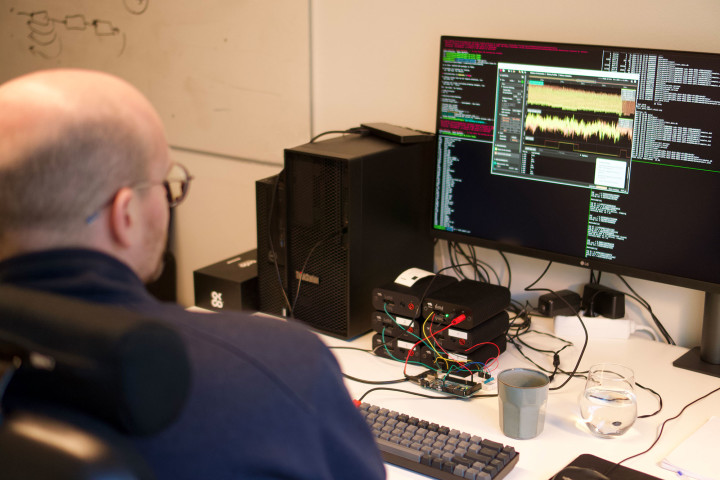
Automated power testing is the backbone of achieving longevity in battery-driven Edge AI devices. With the right tools, it enables fast iteration, consistent validation, and confidence that every hardware or software change supports long-term performance goals (Figure 1):
- Catch power issues early with regression testing and CI quality gates.
- Gain speed and coverage by automating complex test matrices of modes, ML models, and firmware versions.
- Ensure repeatability with identical scripts, loads, and conditions across benches and teams.
- Emulate batteries for realistic validation across models, firmware, and hardware versions.
- Physically test batteries during incoming inspections for verified performance.
- Enable a shared “power language” across teams and projects.
Edge AI expands device capabilities — but also testing complexity. Automated power testing keeps costs in check by detecting issues early, before your customers ever notice them.
Scalable and Cost-Efficient Power Testing
The Otii Product Suite [4] offers the flexibility and scalability required to develop long-lived, battery-powered edge AI devices. Its integrated power supply and analyzer enable everyday testing and optimization, while the Otii Toolboxes automate power profiling and battery life validation (Figure 2).
Power and Battery Profiler
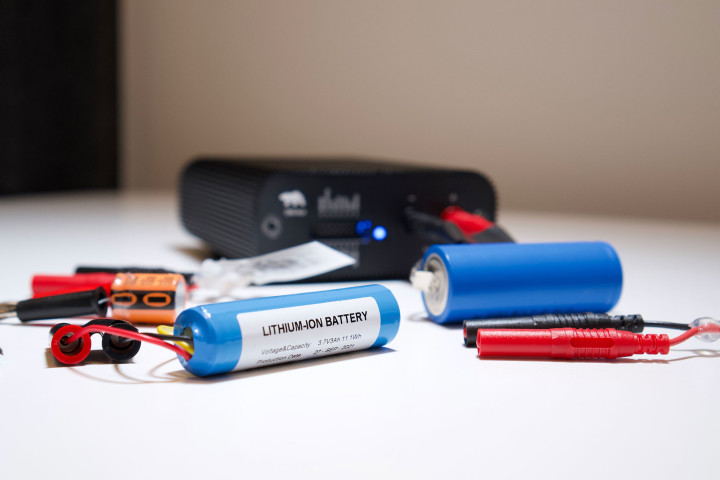
The Otii Battery Toolbox enables cost-efficient battery cycling and validation on the bench or in the lab (Figure 3). It discharges batteries under realistic conditions to capture the actual behavior of devices across models and modes. Combined with the Otii Automation Toolbox, it allows developers to emulate profiles and accurately estimate battery life for every hardware and software iteration.
Packaged Scripting Modules for Python and C#
Integrating Otii instruments into automated workflows is simple with the Otii Automation Toolbox and its pre-built scripting clients. These modules streamline the TCP API into easy-to-use commands, allowing engineers to build custom, architecture-independent test environments for benchmarking hardware and validating energy performance. You can control instruments, mark inference events, and calculate energy per operation — all in one setup.
Low power as a quality gate in Continuous integration (CI)
Integrating Otii power profiling into CI pipelines enables power testing to become a continuous, automated process. It tracks system behavior after each update, catches regressions early, and ensures consistent performance, making “low power” an integral part of the product’s DNA.
Designing for Longevity: Power Optimization at the Edge
Building long-lived edge AI devices isn’t so different from conventional embedded design — except for one key factor: ML models and on-device computing introduce new trade-offs that demand deeper insight into power behavior and optimization.
Success depends on whether we follow or not the four essential habits when developing a device: optimizing the ML model, refining the payload, protocol, and transmission policy, choosing a battery capable of supporting dynamic and diverse use cases, and profiling power consumption throughout each iteration to maximize longevity.
A flexible, scalable automated setup, such as the Otii Product Suite, ensures consistent, cost- and time-efficient power validation across the test matrix, forming the backbone of efficient R&D and long-lasting edge AI products.
Learn more:
[1] 7 Tips for Optimizing AI Models for Tiny Devices (Edge Impulse Blog, 2025)
[2] Tiny Machine Learning for Resource-Constrained Microcontrollers (Journal of Sensors, 2022, MDPI.org)
[3] Energy Footprint and Reliability of IoT Communication Protocols for Remote Sensor Networks (Sensors 25, no. 19: 6042, 2025, MDPI.org)
[4] Otii Product Suite
Discussion (0 comments)