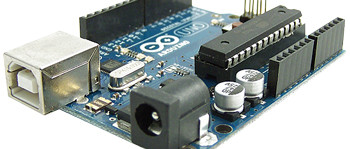
| You might ask why you should use a microcontroller when it’s possible to do so much with ordinary analog electronics. At first glance, this...



Burkhard Kainka (231)
€5 (FREE for Members)
€5 (FREE for Members)
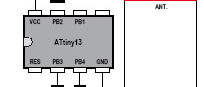
| It all started with high frequencies: radio technology was the driving force of electronics. At first there were electron tubes and AM radio...
€5 (FREE for Members)
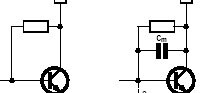
| If we only used electronics to process existing signals, we would be missing an important aspect of electronics: generating oscillating sign...
€5 (FREE for Members)
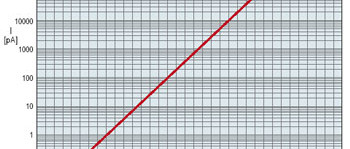
| It is often necessary to deal with tiny currents in the picoamp to microamp range when making measurements in ionisation chambers and other...
€5 (FREE for Members)
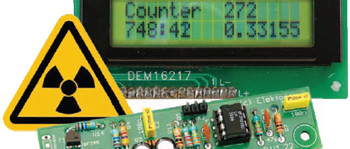
| The radiation meter published in the November 2011 edition of Elektor is currently being used by many readers, mainly in making long-term me...
€5 (FREE for Members)
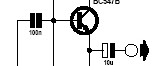
| The principle of a (preferably) linear amplifier is straightforward: an audio signal modulates (varies in volume and frequency) the small ba...
€5 (FREE for Members)
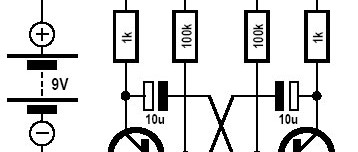
| In the previous instalment we worked with static flip-flops and Schmitt triggers. Now things get a bit more dynamic, with capacitors providi...
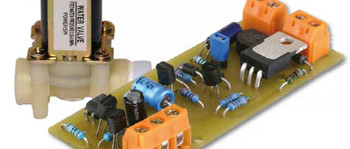
| Relays or contactors are often used to switch AC-powered inductive loads such as motors, valves or electro magnets. When the device is switc...
€5 (FREE for Members)

| Energy saving is all the rage, and here is our small contribution: how much (or rather how little) current do we need to light an LED? Exper...
€5 (FREE for Members)
| An LC oscillator is usually adjusted using a variable capacitor. However, for frequencies below around 100 kHz this calls for a variable cap...