

Build a 2-channel NMEA data logger
April 12, 2016
on
on
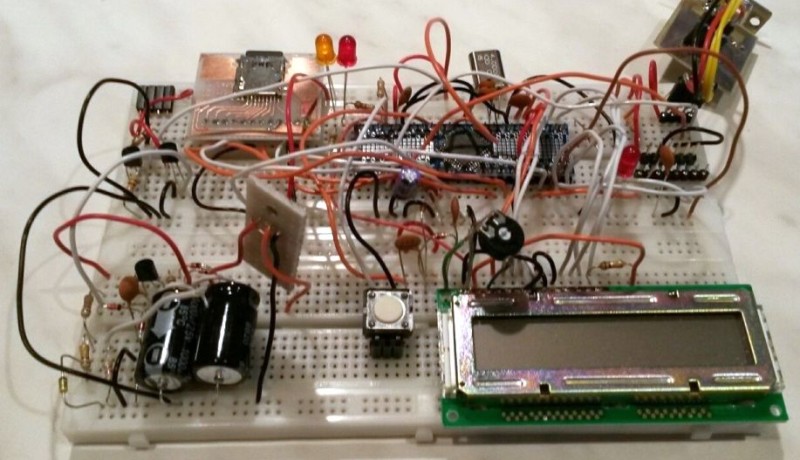
GPS receivers have found their way into many amateur projects thanks to their output signal consisting of simple human-readable text strings. The format of these comma-separated-value strings was invented by the National Marine Electronics Association or NMEA and is also used to convey all kinds of other navigational information mainly used on ships, like water depth, speed over ground and over water, autopilot commands, etc. Although a “new” standard NMEA2000 exists, it is the good old NMEA0183 that people like to record and play with.
AndersG has built himself an NMEA0183 data recorder with two optically isolated input channels and an SD-card for data storage. Based on a PIC24 it also has two analog inputs for logging non-NMEA signals. A capacitor bank provides enough energy to shut down the system safely in case of a power fail.
Read more on Elektor.Labs…
AndersG has built himself an NMEA0183 data recorder with two optically isolated input channels and an SD-card for data storage. Based on a PIC24 it also has two analog inputs for logging non-NMEA signals. A capacitor bank provides enough energy to shut down the system safely in case of a power fail.
Read more on Elektor.Labs…