


One Formula E battery for my home please
July 25, 2016
on
on
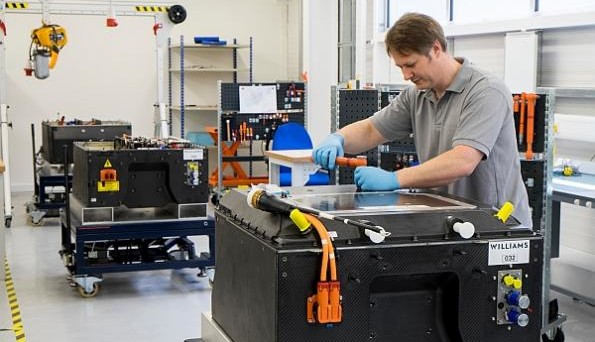
UK-based Racing car developer Williams Advanced Technology is looking to re-use the battery packs and monitoring electronics from its Formula E electric cars for home energy storage. To Williams Advanced Technology, Formula E is a test ground for high power batteries working in harsh environments, where they have been able to fully test and validate cooling systems, charge retention and module design, as well as apply their technology to other projects outside of motorsport.
In Season Two of Formula E the batteries have had to deliver a whopping 850 kWh of power and that, Williams say, will have to double for the current season, reaching the levels necessary to power the average home for four months. This has lead to some major engineering challenges in cooling and maintainability. With all the cells in one battery working in series, each cell needs to be cooled and controlled well in order to perform. With street circuits tending to be quite bumpy maintainability is important as well, and Williams have already been able to redesign some of the features for improved performance and reliability.
No doubt many energy explorers and off-grid people would be happy to have a Formula E battery in their dwellings, even if it is “second hand” or slightly off spec. If it works on a bumpy road and at 60 mph, surely it can power the odd LED lamp and camping-size electric stove.
In Season Two of Formula E the batteries have had to deliver a whopping 850 kWh of power and that, Williams say, will have to double for the current season, reaching the levels necessary to power the average home for four months. This has lead to some major engineering challenges in cooling and maintainability. With all the cells in one battery working in series, each cell needs to be cooled and controlled well in order to perform. With street circuits tending to be quite bumpy maintainability is important as well, and Williams have already been able to redesign some of the features for improved performance and reliability.
No doubt many energy explorers and off-grid people would be happy to have a Formula E battery in their dwellings, even if it is “second hand” or slightly off spec. If it works on a bumpy road and at 60 mph, surely it can power the odd LED lamp and camping-size electric stove.
Read full article
Hide full article
Discussion (1 comment)