


Getting Started with Zephyr RTOS
April 24, 2024
on
on
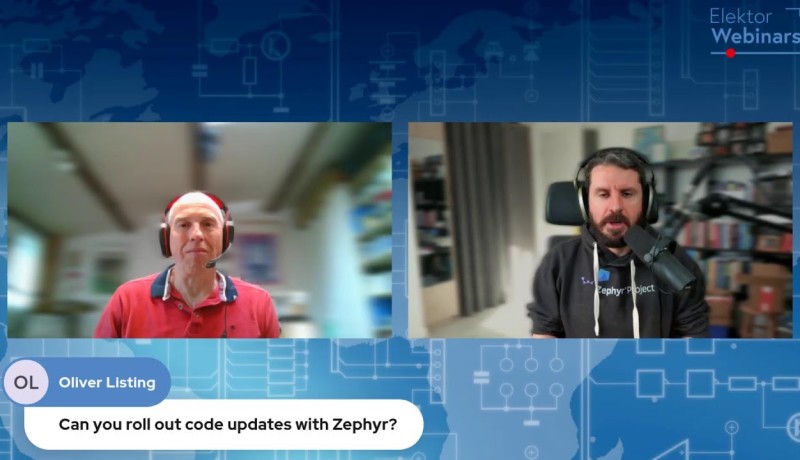
Don't miss our latest, in-depth webinar on Zephyr. If you're new to RTOS like I am, this outstanding presentation is a must-see. You'll discover Zephyr's key features, its architecture, examples of supported platforms, and a comprehensive startup guide. Let's dive in!
The webinar presented by Benjamin Cabé from the Linux Foundation and Clemens Valens from Elektor focuses on the Zephyr Real-Time Operating System (RTOS), emphasizing its role as a hardware-agnostic, open-source solution for embedded applications with limited resources. The presentation details Zephyr's capability to run on various architectures, including ARM Cortex M, Tensilica Xtensa, and RISC-V. The webinar introduces the Zephyr project, highlights its community under the Linux Foundation, and demonstrates its potential through a series of features and live coding examples.
The practical demonstrations include setting up a basic “Hello World” application, manipulating GPIO pins, and utilizing Zephyr’s shell for debugging and system interaction. These demos illustrate how Zephyr supports complex functionalities with minimal setup, allowing for real-time sensor data handling and graphical user interface integration via libraries like LVGL. All in all, the video shows the capabilities of Zephyr as a comprehensive development environment that’s particularly suited for IoT and battery-powered devices. Last but not least, don’t miss the very interesting interactive Q&A session at the end! Watch the video below:
The webinar presented by Benjamin Cabé from the Linux Foundation and Clemens Valens from Elektor focuses on the Zephyr Real-Time Operating System (RTOS), emphasizing its role as a hardware-agnostic, open-source solution for embedded applications with limited resources. The presentation details Zephyr's capability to run on various architectures, including ARM Cortex M, Tensilica Xtensa, and RISC-V. The webinar introduces the Zephyr project, highlights its community under the Linux Foundation, and demonstrates its potential through a series of features and live coding examples.
The Power of Zephyr
During the video, Benjamin demonstrates several features of Zephyr, showcasing its ease of use and adaptability. He highlights the integration of Zephyr with the hardware, using tools like devicetree and Kconfig which aid to configure the application.. These tools enable developers to efficiently port applications across different hardware, addressing common challenges in embedded system development. Additionally, the use of the “west” tool, a kind of swiss-army-knife command-line tool for Zephyr, is shown for managing dependencies, building, and testing applications which streamlines the development process.The practical demonstrations include setting up a basic “Hello World” application, manipulating GPIO pins, and utilizing Zephyr’s shell for debugging and system interaction. These demos illustrate how Zephyr supports complex functionalities with minimal setup, allowing for real-time sensor data handling and graphical user interface integration via libraries like LVGL. All in all, the video shows the capabilities of Zephyr as a comprehensive development environment that’s particularly suited for IoT and battery-powered devices. Last but not least, don’t miss the very interesting interactive Q&A session at the end! Watch the video below:
Explore More!
Want to learn more about electronics? View other great educational videos and tap into the knowledge of experts by checking out our additional content on our Elektor YouTube channel and our Elektor Industry Youtube channel. Subscribe to our Elektor newsletter to receive a consistent flow of expert tech knowledge and interesting perspectives. Subscribe
Tag alert: Subscribe to the tag Zephyr and you will receive an e-mail as soon as a new item about it is published on our website! Read full article
Hide full article

Discussion (0 comments)