


Retro Audio, a Good Service Guide
June 12, 2017
on
on
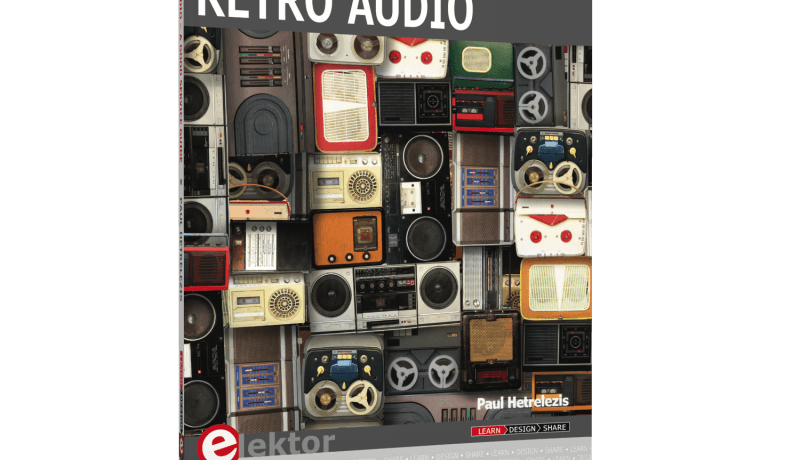
Amidst the torrent of publications released by Elektor on microcontrollers, software, programming, and embedded platforms, suddenly there is book for an audience keen on working with not so modern electronics. Paul Hetrelezis in his recent publication Retro Audio – a Good Service Guide has the wherewithal to organize and spell out the wonderful world of repairing audio equipment of the analogue variety, like tuners, turntables, cassette decks and non-class-D amplifiers with discrete parts like transistors that burn your fingers.
In many cases, these items are often jokingly described as “one man’s grot is another man’s gold” and they can be picked up at small prices at junk stores, flea markets, carboot- and estate sales, and from dumpsters (legal stealing...). The effect is often “deja-vu” or “man-I-paid-a-fortune-for-that-back-in 19xx”. Even If you are not into retro electronics, a thought exercise like this may enlighten you: try to squeeze from your brain your oldest memory you have on TV, radio or multimedia, then find that equipment online. (do not buy it though, you will get hooked).
Today, the greatest friend of the electronics restorer is the Internet, both in terms of acquiring equipment and getting expert advice on it. There are numerous forums like vintage-radio.net, gloeidraad.nl, and dampfradioforum.de where old hands ...
In many cases, these items are often jokingly described as “one man’s grot is another man’s gold” and they can be picked up at small prices at junk stores, flea markets, carboot- and estate sales, and from dumpsters (legal stealing...). The effect is often “deja-vu” or “man-I-paid-a-fortune-for-that-back-in 19xx”. Even If you are not into retro electronics, a thought exercise like this may enlighten you: try to squeeze from your brain your oldest memory you have on TV, radio or multimedia, then find that equipment online. (do not buy it though, you will get hooked).
Today, the greatest friend of the electronics restorer is the Internet, both in terms of acquiring equipment and getting expert advice on it. There are numerous forums like vintage-radio.net, gloeidraad.nl, and dampfradioforum.de where old hands ...
Read full article
Hide full article
Discussion (0 comments)