Once limited to deep-pocketed engineers, the FPGA has become a staple in the modern maker’s toolkit. In this Elektor Lab Talk, digital designer Kevin Hubbard traces the journey from early PALs to modern FPGAs and explains why live video generation remains one of the most exciting FPGA projects around.
In the latest episode of Elektor Engineering Insights, I talked with Kevin Hubbard, founder of Black Mesa Labs and long-time FPGA designer. Hed traces the history of programmable logic — and how these devices went from factory-burned ROMs to reconfigurable chips powering modern digital systems.
From One-Time PALs to Reprogrammable FPGA
Hubbard explains that early PALs were single-use — once programmed, they couldn’t be changed. Later versions became flash-based or SRAM-based, allowing their configurations to be reloaded from external memory at power-up.
This ability to redefine hardware instantly turned the FPGA into a powerful platform for experimentation.
Why FPGAs Still Feel Like Magic
Unlike microcontrollers such as the Arduino, which execute code one instruction at a time, FPGAs perform many operations simultaneously. Hubbard highlights live video generation as a prime example.
This immediacy — seeing your hardware design come alive onscreen — is what continues to inspire hobbyists and engineers alike.
The Price of Entry: Then and Now
In the 1990s, FPGA tools and devices were prohibitively expensive. Hubbard recalls asking for an evaluation board costing around $500, while even a basic software license added another few hundred dollars.
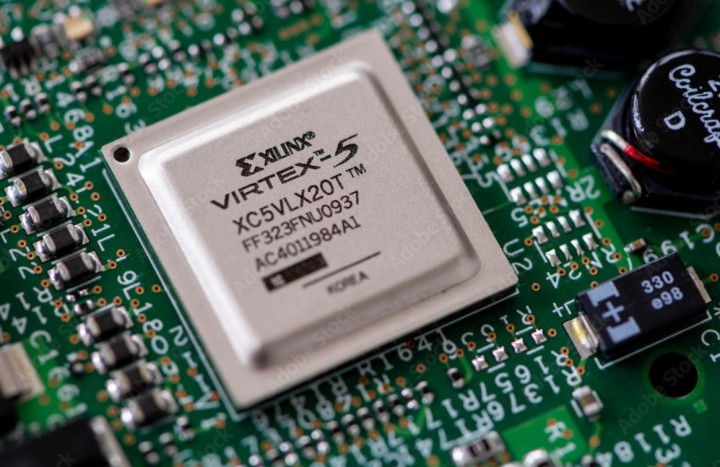
Xilinx Virtex-5 FPGA chip
=
“You’d run your design overnight and hope it finished by morning,” he laughs.
Today, with affordable boards and free toolchains, anyone can experiment with parallel logic and digital design — a far cry from those early days.
Tag alert: Subscribe to the tag Embedded & AI and you will receive an e-mail as soon as a new item about it is published on our website!
Read full article
Hide full article
About Brian Tristam Williams
Brian Tristam Williams is a content creator who’s had a passion for computers and electronics since he got a “microcomputer” at age 10. He bought his first Elektor Magazine at 16, and has been orbiting the electronics and computers ecosystem since. He first co... >>





Discussion (0 comments)