


Semiconductor Tariffs 2025: What the Exemptions Mean for the Electronics Industry
April 7, 2025
on
on

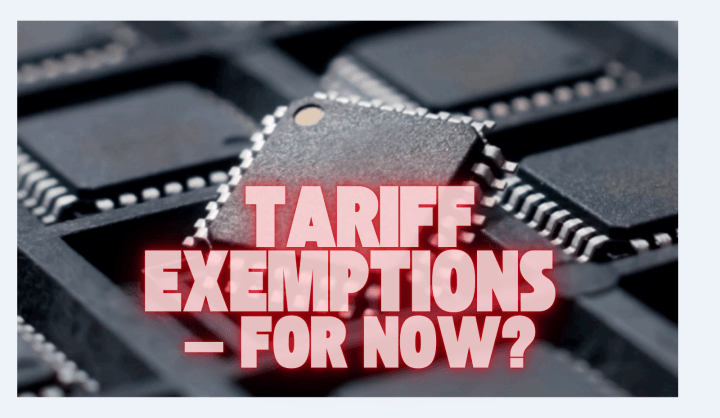
Semiconductors are currently exempt from United States tariffs, which means the global semiconductor supply chain (and many Elektor community members) has some breathing room — at least for the moment.
In early April, the Trump Administration announced comprehensive new import tariffs to take effect April 5. Under the broad policy, a 10% tariff now applies to imports entering the US, with potentially higher rates for goods from countries such as China.
What do these developments — and the threat of semiconductor tariffs — mean for the Elektor community and the broader electronics industry? Let's take a look.
Update 4/15/25: On April 1, 2025, the United States launched a Section 232 investigation, potentially bringing 10-25% tariffs by the middle of May. Though semiconductors are currently exempted, President Trump stated Sunday: "The tariffs will be in place in the not distant future because, as you know, like we did with steel, like we did with automobiles, like we did with aluminum, which are now fully on, we'll be doing that with semiconductors, with chips, and numerous other things."
Given the current pace of tariff-related news and shifting trade policies, it is impossible to predict the long-term ramifications on product prices and overall innovation. What is clear is that companies relying on semiconductors will have to remain agile and reactive in the coming days to remain competitive. Companies relying on semiconductors? That's a long list.
Of course, the situation creates pricing pressure across the tech landscape. From AI-focused companies building datacenters to IoT startups looking to scale, many electronics industry companies will likely face rising hardware costs even if the chips themselves remain untaxed in the near term.
For the pro engineers, electronics makers, and EE/ECE students in Elektor's global community, this could impact BOM costs, everyday design decisions, and production schedules in the months ahead.
With uncertainty about how the tariff situation will shake out in the coming days and weeks, it would be smart for pro engineers, makers, and electronics-related manufacturers to develop tariff-resistant strategies. That could mean diversifying suppliers, finding local component sourcing solutions, or investing in modern inventory planning solutions. At the very least, you must stay alert and informed.
Want to share your take on semiconductor tariffs in 2025? Post your thoughts in the Discussion section below.
In early April, the Trump Administration announced comprehensive new import tariffs to take effect April 5. Under the broad policy, a 10% tariff now applies to imports entering the US, with potentially higher rates for goods from countries such as China.
What do these developments — and the threat of semiconductor tariffs — mean for the Elektor community and the broader electronics industry? Let's take a look.
Update 4/15/25: On April 1, 2025, the United States launched a Section 232 investigation, potentially bringing 10-25% tariffs by the middle of May. Though semiconductors are currently exempted, President Trump stated Sunday: "The tariffs will be in place in the not distant future because, as you know, like we did with steel, like we did with automobiles, like we did with aluminum, which are now fully on, we'll be doing that with semiconductors, with chips, and numerous other things."
Semiconductor Tariffs 2025: What’s Exempt and Why It Matters
Like pharmaceuticals and some critical imports, semiconductors have been spared from immediate tariff impact. This means essential semiconductor-related solutions, such as microcontrollers (MCU), can flow untouched by tariffs into the US. But it is unclear how long the exemption will last.Given the current pace of tariff-related news and shifting trade policies, it is impossible to predict the long-term ramifications on product prices and overall innovation. What is clear is that companies relying on semiconductors will have to remain agile and reactive in the coming days to remain competitive. Companies relying on semiconductors? That's a long list.
Subscribe
Tag alert: Subscribe to the tag microcontrollers and you will receive an e-mail as soon as a new item about it is published on our website! How the Tariffs Impact Embedded Technologies
While semiconductors remain exempt for now, some related product categories are not. High-performance computing hardware, AI accelerator boards, and servers and cloud infrastructure systems — many of which feature semiconductors — are all affected under the new policies.Of course, the situation creates pricing pressure across the tech landscape. From AI-focused companies building datacenters to IoT startups looking to scale, many electronics industry companies will likely face rising hardware costs even if the chips themselves remain untaxed in the near term.
For the pro engineers, electronics makers, and EE/ECE students in Elektor's global community, this could impact BOM costs, everyday design decisions, and production schedules in the months ahead.
Should You Rely on the Exemption?
US-China trade tensions remain high. The Trump Administration has signaled that tariffs on semiconductors in 2025 are still on the table, and China has already responded with retaliatory tariffs, putting US tech exports at risk. Thus, the unease in the market.With uncertainty about how the tariff situation will shake out in the coming days and weeks, it would be smart for pro engineers, makers, and electronics-related manufacturers to develop tariff-resistant strategies. That could mean diversifying suppliers, finding local component sourcing solutions, or investing in modern inventory planning solutions. At the very least, you must stay alert and informed.
Ongoing Tariff Coverage
At Elektor, we’ll continue tracking this fast-moving issue and publishing updates for the engineers and innovators in the electronics space. If you work with semiconductors, keep following our coverage.Want to share your take on semiconductor tariffs in 2025? Post your thoughts in the Discussion section below.
Subscribe
Tag alert: Subscribe to the tag semiconductors and you will receive an e-mail as soon as a new item about it is published on our website! Read full article
Hide full article


Discussion (0 comments)