| Researchers at the University of Leeds have used a type of bacterium which 'eats' iron to create a surface of magnets, similar to th...



More about logic (150)

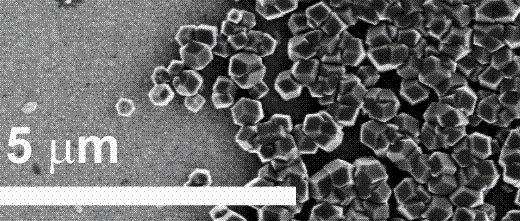
| In the future we might never run out of disk space again. Researchers are developing a method to grow storage devices from bacteria. So when...
€5 (FREE for Members)
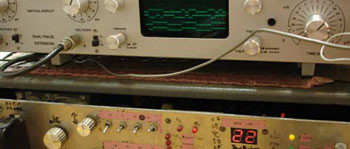
| Recently I dusted off my old logic analyser as part of a major housecleaning exercise. The instrument dates from my time as a student in the...
€5 (FREE for Members)
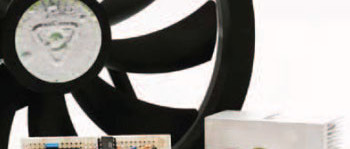
| This project is based on the ‘Fan-Flash’ published in the December 2010 edition, a circuit that gives the illusion of stopping the blades of...

| In the wake of the London riots Prime Minister David Cameron floated the idea of a partial ban on social media. But is the technology in pla...
€5 (FREE for Members)
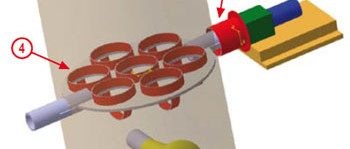
| Although the final application, a reliable system to hatch chicken eggs, may seem specialized, the method of getting there has potential for...
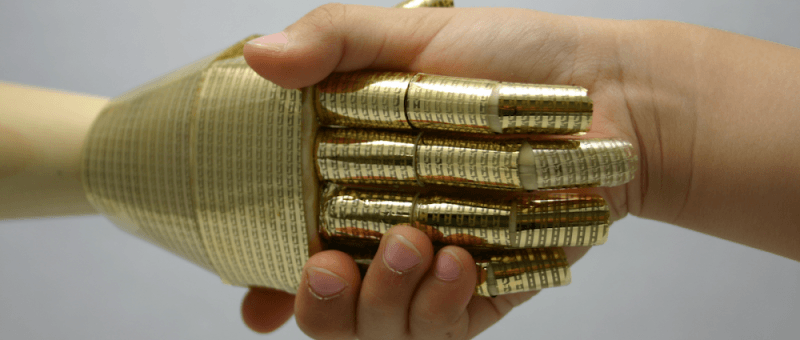
| We’re at the dawn of the fifth technological revolution. At least, that’s the working premise of the recently founded think/do tank the Hyb...
€5 (FREE for Members)
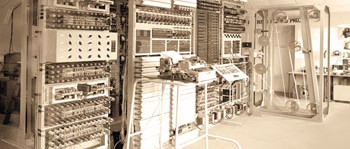
| Colossus was a digital computer that contained 2400 valves and ran its programs as fast as a modern computer. It was designed in 1943 and ma...
€5 (FREE for Members)
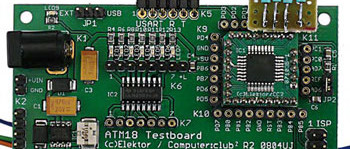
| The oscilloscope is a fine tool for showing the evolution of a signal in time, but when it comes to digital signals it soon shows its limita...
€5 (FREE for Members)
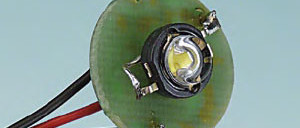
| The small super-bright Luxeon LEDs from Philips are suitable for many applications, including small but handy (that is, bright) pocket torch...