


Rain On Command
May 3, 2010
on
on
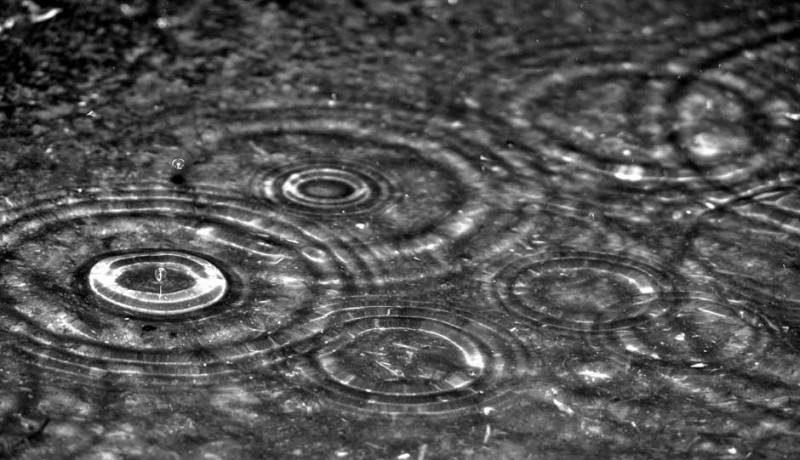
About a month ago I read a small news article about 'making it rain'. Beijing authorities declared that they are in possession of a technology which could bring rain in the wanted regions in ideal quantities. Supposedly a group of scientists shoot 'meteorological rockets' into the air that 'produce rain' by vaporizing clouds. I immediately thought of desert tribes giving up their rain dance traditions. But this Chinese technology has its limits; it needs clouds to vaporize. No clouds, no rain.
But what if you could create clouds out of nothing? A group of scientists from the University of Geneva actually managed to 'create' clouds using a laser. A cloud chamber was filled with air that was saturated with water. Short pulses of infrared laser light were then fired into it. This ionized the air and caused water droplets to condence and form a cloud.
The team did a real world experiment and fired their laser into the air near Berlin. The team confirmed the formation of new clouds and was able to 'make it rain'. The team sees a great future for this technology and thinks it might be a solution for the growing drought problems.
But what if you could create clouds out of nothing? A group of scientists from the University of Geneva actually managed to 'create' clouds using a laser. A cloud chamber was filled with air that was saturated with water. Short pulses of infrared laser light were then fired into it. This ionized the air and caused water droplets to condence and form a cloud.
The team did a real world experiment and fired their laser into the air near Berlin. The team confirmed the formation of new clouds and was able to 'make it rain'. The team sees a great future for this technology and thinks it might be a solution for the growing drought problems.
Read full article
Hide full article
Discussion (1 comment)