
An atmospheric electrical instrument for educational outreach [130416]
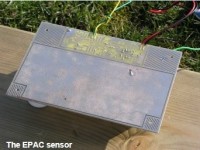
Electricity in the atmosphere provides an ideal topic for educational outreach in environmental science. To support this objective, a simple instrument to measure real atmospheric electrical parameters is proposed. This project compliments educational activities undertaken by the Coupling of Atmospheric Layers (CAL) European research collaboration.
Electricity in the atmosphere provides an ideal topic for educational outreach in environmental science. To support this objective, a simple instrument to measure real atmospheric electrical parameters is proposed. This project compliments educational activities undertaken by the Coupling of Atmospheric Layers (CAL) European research collaboration. The instrument is inexpensive and simple to operate, allowing it to be used in schools. It is suited to students at a variety of ifferent educational levels, who will be able to make measurements of the fair weather electric field and current density, thereby gaining an understanding of the electrical nature of the atmosphere. The timing of this initiative coincides with the centenary of the 1906 paper in which C.T.R. Wilson described an apparatus to measure the electric field and conduction current density, which continued regularly in the UK until 1979. The instrument proposed is based on the same physical principles as C.T.R. Wilson's instrument. A.J. Bennett and R. G. Harrison Department of Meteorology, University of Reading, Reading, RG6 6BB UK
Elektor Magazine has been one of the leading sources of information on electronics for engineers, designers, start-ups and companies for 65 years. Our magazine is powered by an active community of electronics engineers – from students to professionals – who are passionate about designing and sharing innovative ideas.
For them, we publish hundreds of items a year, in formats such as articles, videos, webinars, and other learning formats. Our mission is to share knowledge in every possible way and inspire readers with the latest developments within the electrical engineering sector.
Thank you for your vote!
Leave further comments in the fields below.
Thank you for your vote!
If you wish to leave a comment with your rating, please first use the login below. If not, just close this window.
Discussion (0 comments)