


Review: Otii Arc demo kit — what’s draining my battery?
March 13, 2018
on
on
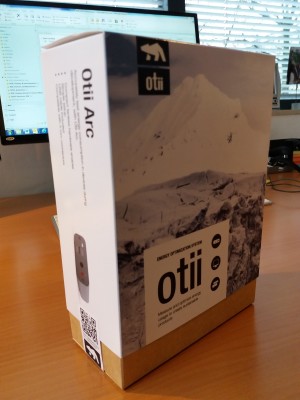
I wrote previously that it is hard to reach the EXIT / AUSGANG gates at the embedded world trade show in Nuremberg and not have a few demo or dev kits in your sponsored rucksack. That’s why the show is a must-attend for serious electronicists of all ages. I consider myself one but this year I was unable to attend the show and what do you think, I still I received a kit — it simply arrived in the mail a few days later. It is the Otii Arc Demo kit from IoT developers Qoitech in Sweden hence the polar bear on the box. On the Arc box proper I saw “Sony Belgium” printed.
Test and measurement, signal processing with mixed analogue and digital means and anything connected to a laptop via the USB are dead certs when comes to arousing my technical curiosity. So I left the usual stack of ST and TI microcontroller boards to my fellow reviewers here on Elektor e-zine and decided to do a quick review of a piece of equipment that’s supposed to answer that perennial question: What’s draining my battery? and how can I get help from fellow engineers in the community to identify and slam the culprit.
If you think there isn’t a problem, (1) do an estimate of the number of low-power IoT devices both around on the globe and in development and (2) read Thomas Scherer’s "Data Logger Hack" story on a personal hunt for an elusive battery-killer in his Toyota Prius. Thomas, this one’s for you.
Test and measurement, signal processing with mixed analogue and digital means and anything connected to a laptop via the USB are dead certs when comes to arousing my technical curiosity. So I left the usual stack of ST and TI microcontroller boards to my fellow reviewers here on Elektor e-zine and decided to do a quick review of a piece of equipment that’s supposed to answer that perennial question: What’s draining my battery? and how can I get help from fellow engineers in the community to identify and slam the culprit.
If you think there isn’t a problem, (1) do an estimate of the number of low-power IoT devices both around on the globe and in development and (2) read Thomas Scherer’s "Data Logger Hack" story on a personal hunt for an elusive battery-killer in his Toyota Prius. Thomas, this one’s for you.
Read full article
Hide full article

About Jan Buiting
Jan Buiting (1958) has been active in electronics and ways of expressing it since the age of 15. Attempts at educating Jan formally have so far yielded an F-class radio amateur license, an MA degree in English, a Tek Guru award, and various certificates in ele... >>
Discussion (0 comments)