


Ultra-thin, high thermal conductivity substrate integrates ESD protection
January 15, 2017
on
on
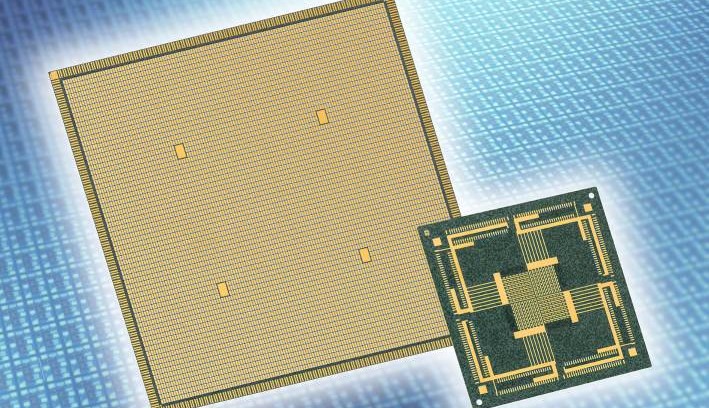
A new, ultra-thin ceramic substrate with an ESD strength of up to 25 kV – more than three times higher than the standard 8 kV of state-of-the-art Zener diodes – also features a high thermal conductivity of 22 W/mK. This is three times better than that of conventional carriers, even though the substrate is significantly slimmer. The new technology is especially well-suited for LED applications where the number and density of LEDs per unit continues to grow.
Developed by TDK and baptised CeraPad, the ceramic substrate enables customized chip-scale packages for standard LED elements from CSP1515 down to CSP0707. Because of its thermal expansion coefficient being almost identical to that of LEDs, mechanical stress between substrate and LED is almost non-existent over temperature changes. The ESD protection integrated in the substrate’s multilayer structure eliminates the need for discrete ESD components, enabling LED arrays with up to hundreds of individually controllable pixels.
Developed by TDK and baptised CeraPad, the ceramic substrate enables customized chip-scale packages for standard LED elements from CSP1515 down to CSP0707. Because of its thermal expansion coefficient being almost identical to that of LEDs, mechanical stress between substrate and LED is almost non-existent over temperature changes. The ESD protection integrated in the substrate’s multilayer structure eliminates the need for discrete ESD components, enabling LED arrays with up to hundreds of individually controllable pixels.
Read full article
Hide full article
Discussion (0 comments)