


Diamonds are 4ever
August 8, 2017
on
on
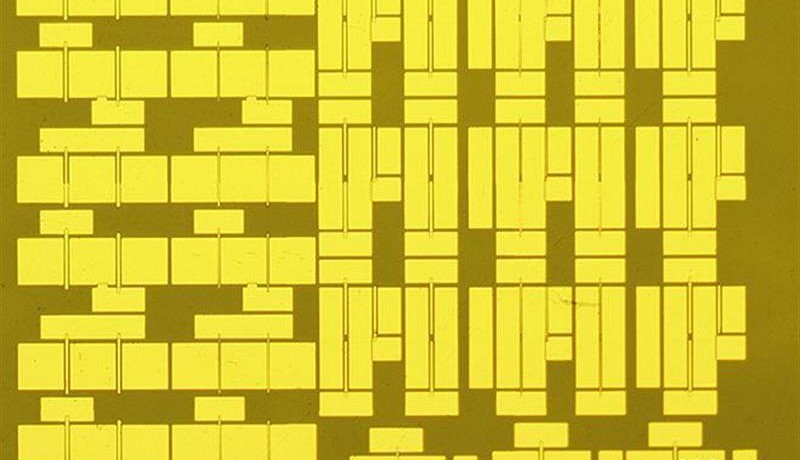
An NIMS (National Institute for Materials Science) research group claims a first in having developed logic circuits equipped with diamond-based MOSFETs at two different operation modes.
The achievement reportedly is a first step toward the development of diamond integrated circuits operational under extreme environments, such as high temperature as well as exposure to (space) radiation and cosmic rays.
Diamond is a promising material to be used in the development of current switches and integrated circuits that are required to operate stably at high temperature, high frequency, and high power.
It had been difficult, however, to enable diamond-based MOSFETs to control the polarity of the threshold voltage, and to fabricate MOSFETs of two different modes – a depletion mode (D mode) and an enhancement mode (E mode) – on the same substrate. To solve this problem, the research group developed a threshold control technique that allowed them create hydrogenated diamond NOT and NOR logic circuits composed of D-mode and E-mode MOSFETs.
The MOSFETs are said to act as load and driver devices for the logic circuits, thus providing complementary transistor actions.
The achievement reportedly is a first step toward the development of diamond integrated circuits operational under extreme environments, such as high temperature as well as exposure to (space) radiation and cosmic rays.
Diamond is a promising material to be used in the development of current switches and integrated circuits that are required to operate stably at high temperature, high frequency, and high power.
It had been difficult, however, to enable diamond-based MOSFETs to control the polarity of the threshold voltage, and to fabricate MOSFETs of two different modes – a depletion mode (D mode) and an enhancement mode (E mode) – on the same substrate. To solve this problem, the research group developed a threshold control technique that allowed them create hydrogenated diamond NOT and NOR logic circuits composed of D-mode and E-mode MOSFETs.
The MOSFETs are said to act as load and driver devices for the logic circuits, thus providing complementary transistor actions.
Read full article
Hide full article

About Jan Buiting
Jan Buiting (1958) has been active in electronics and ways of expressing it since the age of 15. Attempts at educating Jan formally have so far yielded an F-class radio amateur license, an MA degree in English, a Tek Guru award, and various certificates in ele... >>
Discussion (0 comments)