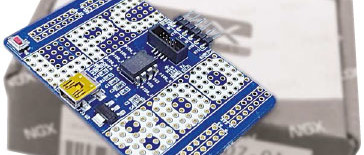
| NXP's LPC800 Mini Kit sports an LPC810 32-bit ARM Cortex-M0+ microcontroller (MCU) in an 8-pin DIP package, a voltage regulator, two pushbut...



More about PC (460)
€5 (FREE for Members)

| The idea is to use an accelerometer (the MMA7361) and place this on the top of your hand. An Atmel controller (AtTiny45) reads the accelerom...
€5 (FREE for Members)
![HACKTOR - the Elektor dog - a PCB platform [150119]](https://cdn.xingosoftware.com/elektor/images/fetch/dpr_1,w_800,h_340,c_fit/https%3A%2F%2Fwww.elektormagazine.com%2Fassets%2Fupload%2Fimg%2Fpublic%2Foriginal%2Fhacktor-profile-img-0.png)
| Hacktor is a modular PCB development platform... oh, and by the way, also a dog. It's still a work in progress, but it will be ready to...
€5 (FREE for Members)

| The technology of manufacturing printed circuit boards professionally has evolved immensely since Elektor published its first “panels” some...
€5 (FREE for Members)

| Post a project and get publishedPost the project(s) that you did with the LPC800 Mini-Kit and maybe you will be selected to write an article...
€5 (FREE for Members)
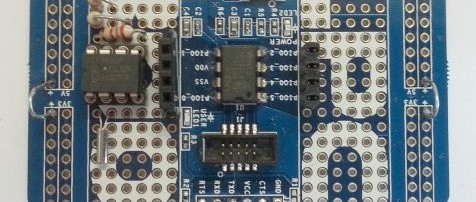
| A little circuit to try out the built-in I²C driver of the LPC810. Thanks to the Switch Matrix the I²C interface can be connected to the few...
€5 (FREE for Members)
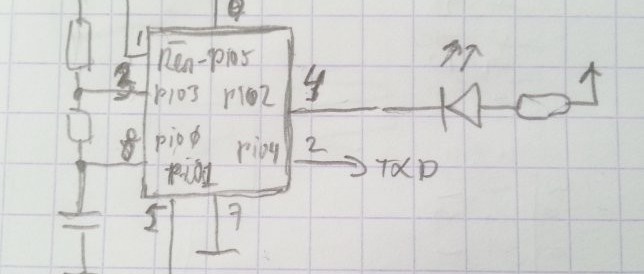
| The new LPC810 from NXP is an ARM Cortex-M0+ based microcontroller in an 8-pin DIP package. It is also very cheap, although not as cheap as...
€5 (FREE for Members)
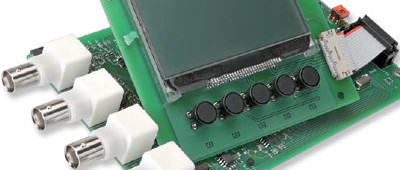
| After the flood of theory, design considerations and software descriptions in the first two installments we are ready to tackle practical ma...
€5 (FREE for Members)
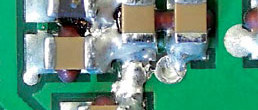
| Wave soldering is a technique often used to solder complete PCBs very quickly in production lines and facilities. It is best described as ru...
€5 (FREE for Members)
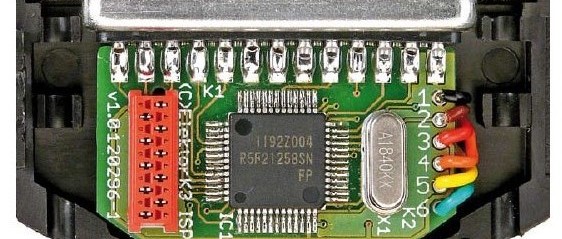
| Transferring up to 24 digital signals using your computer’s USB interface is simple with the multifunction cable described here. You can als...