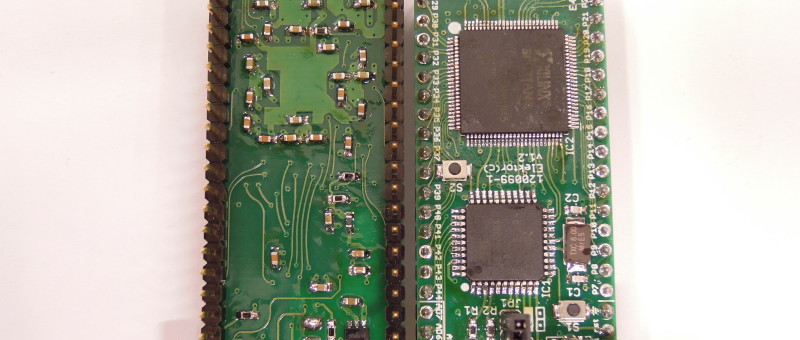
| FPGAs are unquestionably among the most versatile but complex components in modern-day electronics. An FPGA contains a maze of gates and oth...



More about FPGA (188)
€5 (FREE for Members)
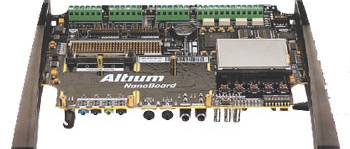
| Simulations are an important part of circuit design. Circuits built with ‘ordinary’ components can be simulated quite well with conventional...
€5 (FREE for Members)
| The use of the low-cost RFM12 868 MHz (US: 915 MHz) ISM (licence-free) radio module with microcontrollers like the ATmega and the R8C13 is s...
€5 (FREE for Members)
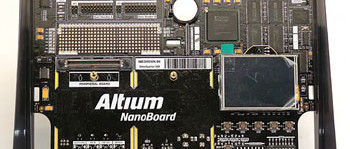
| A few months ago Australian software and tools specialist Altium cut the price of its Altium Designer electronic CAD software suite consider...
€5 (FREE for Members)
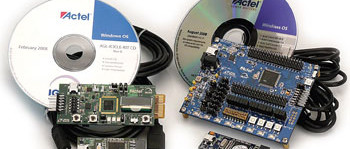
| Often when we talk about FPGA, the first we think of are Altera or Xilinx (in alphabetical order) – but these are not the only manufacturers...
€5 (FREE for Members)
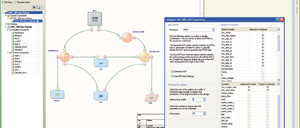
| FPGAs are normally programmed in special-purpose programming languages such as VHDL, which unfortunately can be hard to learn. Now, however,...
€5 (FREE for Members)

| FPGA technology has evolved rapidly in just a short time, and FPGAs are now suitable for a broad range of applications. Nevertheless, most n...
€5 (FREE for Members)
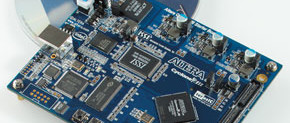
| FPGA manufacturers are engaged in an intense battle for the favour of electronics engineers. In the last few years the conflict has moved fr...
€5 (FREE for Members)
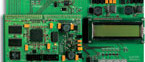
| We’ve used nearly every I/O port of the prototyping board at least once in this FPGA course. We say ‘nearly’ because we haven’t used the Eth...
€5 (FREE for Members)

| In this instalment of the course we’re going to put together our own USB microcontroller. In terms of technical features, it can certainly h...